Post #8

I appreciated the opportunity to have several guest speakers throughout the semester. They each offered a unique perspective on the world and I enjoyed listening to what they had to say. Scott Christiansen stood out to me because of his relatable topic of social media. He spent some time talking about the rise of social media and its subsequent impact on our lives. Additionally, he asked us to check some data on our phone pertaining to general use, notifications, etc. Furthermore, he challenged me personally to delete my social media applications for a set amount of time, which I did and enjoyed. This was an interactive and educational discussion of social media which gave me some interesting ideas to consider as we continue to evolve in this digital age.

           Mary Stegmaier was another guest speaker who stood out to me for her competence and wide range of experience. She discussed North Macedonia and its interaction and conflict with Greece. I was uninformed on the contemporary name issues North Macedonia has dealt with so I found this talk to be enlightening. She was able to visit this country when they voted on their name change which was an interesting experience for anyone to have, so I enjoyed learning about that process. Additionally, she talked about Europe in which she has had the opportunity to travel around. She painted a picture of some historic cities within Europe which may be of value to visit at some point in the future.

           Diving into a country this semester was an educational experience that I welcomed and enjoyed. I studied Bangladesh and deeply strengthened my understanding of their current state, history, and contemporary challenges in which Bangladeshis face. Bangladesh struggles with overpopulation, poverty, and a weak government. In my opinion, the government is scraping by with what they are doing to advance their country. They are doing enough to not get ridiculed, but they aren’t putting their country in a position to succeed. They lack the regulatory and legislative changes they need. Because of this, they struggle to attract external investment in their country. Their strong economic growth and significant population, however, puts them in a position to succeed. This is a promising nation that I think has the ability to make a name for itself in the coming decades. While I was able to grow my knowledge of Bangladesh, I was able to learn how to learn about new countries and parts of the world. This was invaluable. The research I did will aid me in the future as I explore new topics.

blog post #5: Human Rights and the Environment

As a rapidly growing nation, Vietnam faces a plethora of environmental and human rights issues. High population growth rate, rapid urbanization and industrialization, weak enforcement of the laws on environmental protection, and a lack of education have all contributed to this problem. This is a commonly seen occurence at the onset of industrialization, as the nation needs time to adjust its policies in reaction to the shift from a rural agrarian society to one focused on industrialized exports. Major problems include water and air pollution, as well as solid waste. Currently, only about 70% of Vietnam citizens have access to clean drinking water, and proper drainage/sewage infrastructure is also a pressing concern. To combat these issues, the Prime Minister issued decisions on the “Orientation for Development of Water Supply in Vietnam’s Urban Centers and Industrial Parks Leading to 2025, and Vision for 2050” and the  “Orientation for Development of Water Sewage and Drainage Systems in Vietnam’s Urban Centers and Industrial Parks Leading to 2025, and Vision for 2050”. Similar decisions have been passed on the issues of solid waste treatment and air pollution. In addition, Vietnam’s Law on Environmental Protection, which was originally established in 1994, has been repeatedly strengthened with the intent to improve environmental sustainability. https://www.export.gov/article?id=Vietnam-Environmental-and-Pollution-Control-Equipment-and-Services

Water pollution has also begun affecting one of the biggest Vietnamese industries–fishing. In April of 2016, a toxic chemical spill caused by the Formosa Ha Tinh Steel Corporation resulted in over 70 tons of dead fish washing ashore. This devastated the fishing industry in Vietnam, and negatively impacted over a quarter of a million Vietnamese citizens. In response to massive citizen protests regarding the incident, the corporation took responsibility for the spill, and pledged over 500 million in reparations. This did not assuade public anger over the government’s mishandling of the ecological disaster, but did succeed in resolving the protest. https://www.theguardian.com/global-development/2017/aug/14/vietnamese-fishermen-jobless-fish-poisoning-battle-justice

Climate change is inherently tied to the issue of human rights, especially in regards to developing nations and island dwellers. The most pressing concern for indigenous island dwellers is the rising sea levels; their available living space is continuing to shrink every year, and eventually they will be forced to flee their ancestral homes. For many people, this would mean more than simply moving–they would their livlihood, their way of life, and everything they have ever known. The same is true for the people displaced due to the effects of deforestation. Soil erosion can cause silting of water bodies, as well as deadly mudslides. Additionally, many developing nations have become repositories for the industrialized world’s waste, resulting in beaches piled with trash and scrap. All of these are part of the price for irresponsible environmental practices, and will have a real and direct effect on the lives of millions of people. 

Endangered cultures are those that are in danger of dying out. Whether it is because all of the members have died, or because the culture has been absorbed by a more powerful entity, it is a sad truth that many unique cultures and languages in this world are now extinct. Unfortunate as it may be, I think that this may be an inevitability of globalization, especially in a world that has long been dominated by a capitalist eurocentric mindset. Because those that are less technologically advanced have often been seen as lesser, or “savages”, many cultures have been ravaged by the wave of globalization. In order to move beyond this eurocentric ideology, we need to cease operating under the assumption that different is equivalent to inferior. Other beliefs and mindsets have value in that they provide a perspective unique to that individual. Wade Davis discusses the difference between the “biosphere” and the “ethnosphere”. I believe this also can also apply to the concept of biodiversity. Without a diverse array of cultural perspectives from which to draw, humanity is locked into a rigid structure. We cannot move forward as a global society until we accept other cultures and perspectives into our lives as equally valid options.

Post 8

The various lectures in this class have been eye-opening and informative. I found Scott Christiansen’s lecture to be especially inspiring. My generation has been the first to interact with social media and technology for the majority of our lives. Because social media is a recent development, research lacks in the effects of spending a tremendous amount of time with phones and other devices. So far, there have been many negative effects found to be associated with social media usage. Scott Christiansen did an eloquent job of explaining the harms from excess time on social media. Having a few extra hours a day to sleep, relax, or study would be very beneficial, and a large amount of time on my phone is wasteful. Because of his persuasive lecture, I decided to delete one of my social media apps to be on my phone less often.

Another lecture I particularly enjoyed was Jung Ha-Brookshire’s lecture. She also was very persuasive in telling her story and connecting it to different issues in the world. She took a stance on low-paying labor jobs in textile factories that was thought-provoking. Her use of the video from a company in Central America was also persuasive to see another example of what she was already talking about. Additionally, I enjoyed learning more about the Textile and Apparel Management program because I did not realize all of the different disciplines encompassed within the program or the prestige of Mizzou’s program.

Through studying and following current events in Cambodia, I have learned a lot about the inner-workings of the country. China plays a large role in Cambodia’s politics and economy which could potentially be detrimental for Cambodia. Also, Cambodia is still recovering from the genocide in the 1970s, and human rights are far from perfect. Cambodia was once a thriving and developed country, but the genocide set Cambodia back to a developing nation, subject to the interests of other global powers. The history of Cambodia, especially the Cambodian Genocide, should be taught more frequently in schools. Unfortunately, the government has not fully repaired since the genocide. Important lessons can be learned from the mistakes made in Cambodia that would keep another similar tragedy from occurring again.

Blog Post #8: Final Post

Favorite Guest Lecturers

My two favorite guest lecturers this semester were Peter Mueser and Jung Ha-Brookshire. These two were actually part of the inspiration to begin looking at economics and international development as a possible career path. I entered this semester with a new major, unsure of what direction I was headed in, but excited to learn about subjects that I had previously not been exposed to. Dr. Mueser’s lecture on labor economics, and his explanation of the textile industry in developing nations awakened in me an interest in economics and global trade that I had previously not been aware of. Before that lecture, I had only ever considered these issues to be black and white. In my mind, sweatshops were the cause of massive amounts of human suffering, so they could only be a bad thing. To an extent, this is true; corporations absolutely take advantage of laborers who have no other prospects. Working conditions are dangerous, hours are long, and wages are low. On the surface level, these factories seem to be a blight. A symptom of the avarice driven society that we have created for ourselves. The issue is not as simple as it seems, however. Dr. Mueser provided the primer for my revaltion, but it wasn’t until Dr. Ha-Brookshire’s lecture that I truly understood what industry can do for a developing nations. In some countries, often those that have been left destitute by warfare or colonization, unfavorable factory conditions are seen as a fantastic opportunity. Dr. Ha-Brookshire was able to obtain an education, as well as a long-term career in the international textile industry, all due to the textile factory that she had worked in as a girl. This gave me a first-hand perspective of the phenomenon Dr. Mueser had descibed, and it was fascinating to me. These lectures helped shape the majority of my academic interest and research over the course of the semester, and have had a lasting effect on my academic career moving forward. 

What I learned about Vietnam

Vietnam has an interesting history. I am currently taking a course on Korean Politics, and it was interesting for me to draw comparisons between the two. Both of these nations share a border with China, and have a complicated history with the superpower. Both were also separated during the Cold War, during the Vietnam and Korean wars. Since the end of the Cold War, however, their paths have diverged. South Korea was able to pull itself from the brink of economic despair, and transformed into the 11th largest economy in the world in only about 20 years. Unfortunately, however, the peninsula has never been able to reunify, and an autocratic regime still exists in the north. Vietnam on the other was reunified at the end of the Vietnam War in 1975, but was unable to achieve the economic growth seen in South Korea. Many factors contribute to this, but it is due in part to the fact that business in Vietnam was seen as in insecure investment for a long time. Unfavorable legislation and the lack of a government guarantee made the nation an unattractive choice for investors. New legislation meant to attract foreign business, as well as the recent US-China trade wars, have now caused an unprecedented economic boom in Vietnam. The nation has now nearly reached the requirements to be called a developed nation, but rapid industrialization has caused a number of social and environmental problems to crop up. Food and water insecurity are a large concern, air pollution is on the rise, and deforestation in the country is reaching dangerous levels. Economic inequality is still a large problem, and rural communities have little access to the amenities of modern life. Much of this inequality is ethnically based, and these problems are especially prominent in the mountainous regions, which are close to the Vietnamese-Chinese border. 

Post #7

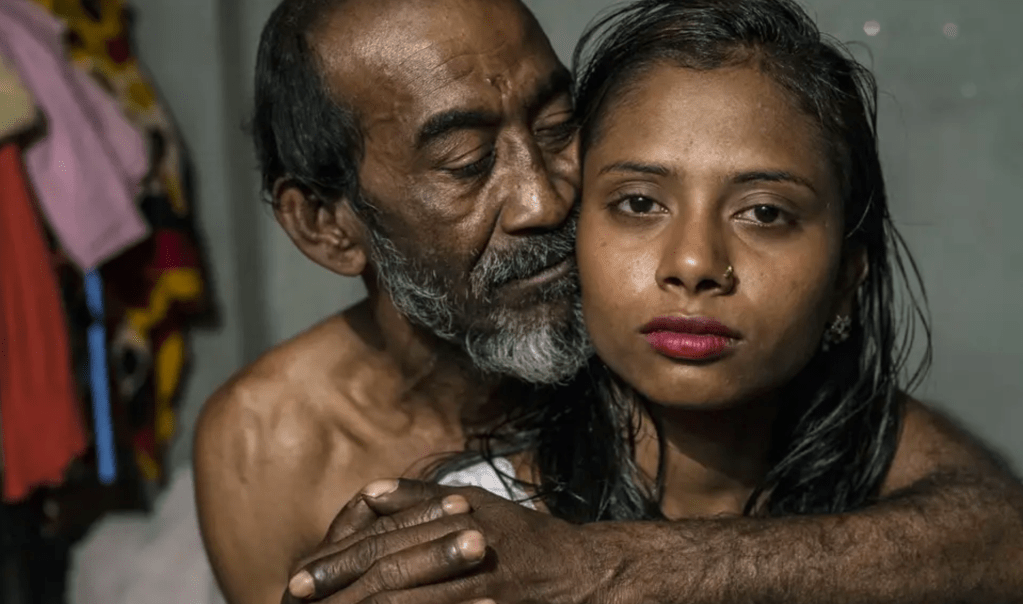
Bangladesh and its citizens are no stranger to sex trafficking. Forced labor and sex slavery have remained ongoing issues in Bangladesh, and it continues to serve as a source country for sex trafficking. This problem especially preys on women and children. Thousands of men, women, and children are trafficked out of the country annually and sexually exploited. Human trafficking is one of the highest profiting illegitimate markets in Bangladesh. Data related to those trafficked are often difficult to acknowledge as credible because of the nature of the business and the unwillingness of those affected to share relevant information. Globally, about 1 in 5 people trafficked are children, compared to Bangladesh’s 1 in 3 figure. This is significant as it is much more likely for children in this country, and South Asia in general, to be exploited. Child marriage is an especially big issue in Bangladesh. According to ‘Girls Not Brides’ 22% of girls are married by the age of 15, and almost 60% are married by 18. Child marriage as a whole in anticipating growth in this area of the world in the coming years. The government of Bangladesh is making efforts to change policy to oppose sex trafficking, however, these efforts are lethargic and minimally effective as the relevance of this crude issue is still monumental.


Goals outlined by the United Nations have aimed at eliminating human trafficking and have raised billions of dollars to do so. These SDGs (Sustainable Development Goals) are being facilitated around the MDGs (Millennium Development Goals) which are a set of 8 international goals established by the United Nations in 2000, to be evaluated in 2015. The goals were listed as follows; to eradicate extreme poverty and hunger, to achieve universal primary education, to promote gender equality and empower women, to reduce child mortality, to improve maternal health, to control HIV/AIDS, malaria, and other diseases, to ensure environmental sustainability, and to develop a global partnership for development. The 17 new goals, to be achieved over the next 15 years are consistent with these previous MDGs. Again, one of these goals addresses the equality of women and hopes to reduce the inequalities they currently face, trafficking included. Female education concerning trafficking awareness can combat sex trafficking by granting women the knowledge and tools needed to keep themselves safe.


The percentage of intelligence in our world that is artificial is increasing. Artificial intelligence is shaping our world and will soon be at the forefront of everything we do. For this reason, it is advantageous to incorporate diversity into this field of study. Additionally, we see AI starting to discriminate against the humans it interacts with. An organization called ‘Diversity in AI’ states “…racial, gender, ethnic, and age discrimination by artificially intelligent systems is probably happening already in many aspects of our lives involving individual and group profiling.” In experimental studies when minority groups are underrepresented, these populations may be more susceptible to error. For this reason, groups like these are aiming to keep AI consistent, fair, and accepting of all ages, genders, races, and abilities.

Sources:

http://diversity.ai/

https://www.iom.int/news/human-trafficking-takes-centre-stage-bangladesh

https://www.un.org/sustainabledevelopment/sustainable-development-goals/

https://www.unodc.org/unodc/en/frontpage/2009/June/human-trafficking-in-bangladesh.html

https://www.theguardian.com/global-development/2019/jul/06/living-hell-of-bangladesh-brothels-sex-trafficking

https://www.independent.co.uk/news/world/within-these-walls-inside-the-legal-brothels-of-bangladesh-a7388676.html

Blog Post #7: Women’s Rights and Diversity

1.     Is sex trafficking, sex slavery an issue in your country and region?

Human trafficking is a significant problem in Vietnam. As a developing nation, the Southeast Asian country is vulnerable to this practice, and it acts as both a source and destination for the enslaved. It is spurred along in part by corruption at checkpoints and border crossings. The vast majority of cross-border traffic flow involving Vietnam are with the neighboring countries of Cambodia, Laos, and China, but Vietnamese victims are also sent to Thailand, Malaysia, Taiwan, South Korea, and Singapore. China accounts for more than 65% of identified cases of trafficking originating in Vietnam. Due to their lower socioeconomic status, women are more susceptible to this than men. Many are tricked by promises of employment then sold to brothels as sex slaves, or forced into marriage. Children are also popular choices for sex trafficking and slavery; the demand for virgins and children is growing with the child sex tourism industry. In Vietnam, it is also common for children to be forced into begging or hawking on the streets. Though less common, men are also victims of human trafficking, usually for the purpose of forced labor in cannabis farms, brick factories, mines, sugarcane fields, etc. Usually these men belong to ethnic minorities. Traffickers come in many different forms, including recruitment agency staff and family members. Additionally, there exist larger organized crime groups that traffic humans internationally, even to the U.K. http://un-act.org/vietnam/

2.     The article (pdf) Born Free talks about the Sustainable Development Goals (SDGs) which came into effect in 2016. Find out if human trafficking is addressed by one of the goals? What needs to be done to combat human trafficking?

The article largely discusses the Millenium Development Goals (MDGs) set by the UN at the turn of the century. Their inception, the MDGs have played a large part in deciding where donor dollars will be allocated, helping the development community organize and coordinate on an unprecedented scale. Unfortunately, the goals are not infallible, and leave out certain prominent issues, such as the human trafficking crisis. Trafficking has not as of yet been made a priority for the development community, and the illicit industry continues to thrive year after year. That is not to say that there are no organizations prioritizing human trafficking: the U.S. agency for Internation Development, Humanity United, the Oak Foundation, Walk Free, the Freedom Fund, and NoVo are all focusing solely on eliminating human trafficking. Additionally, many of the goals listed in The Outcome Document involve human trafficking in some way, and many of the subgoals would, if completed, could indirectly reduce the threat of human trafficking in developing areas. This is not enough, however. In this document, there are no clearly defined parameters of the problem as it currently exists, nor are there any quantified goals for its reduction. In order to affect great change on this problem, human trafficking must be prioritized as a global crisis. Instead of incorporating elements of the problem into other goals, the eradication of human trafficking should be a clearly defined goal in the MDG, and should receive the attention that is warranted for a humanitarian crisis of this magnitude. 

3.     AI is an area that needs more diversity. Why? How can there be changes? What needs to change?

Like all fields of study, artificial intelligence would certainly benefit from an increase in diversity. In her TED talk, Chimamanda Ngozi talks about “The Danger of a Single Story”. In summary, she claims that it is dangerous to rely solely on the narrative of a single group or experience (https://www.ted.com/talks/chimamanda_adichie_the_danger_of_a_single_story?language=en). Human beings are shaped by our experiences, and everyone has something different to bring to the table based on our upbringing and environment. To only reference a select group of homogenous experiences while excluding the possibility for a difference of opinion is a dangerous way to operate. 

In “Fei-Fei Li’s Quest to Make AI Better for Humanity”, Jessi Hempel describes Li’s rise to prominence in artificial intelligence, her creation of the now globally utilized ImageNet, and her struggle to bring more girls and minorities into the field. According to Li, the inherent biases present in AI engineers tend to be passed down to their creations (https://www.wired.com/story/fei-fei-li-artificial-intelligence-humanity/). In conjunction with the growing societal function of AI and the fact that most people working in the AI industry are white men, this paints a foreboding picture. Unless more scientists like Li are able to enter the industry and fight for a diversity, any biases held by white men are likely to begin shaping our society even more than they already do (https://www.wired.com/story/fei-fei-li-artificial-intelligence-humanity/). 

In order to begin this change, we need to eliminate the concept of “gendered” professions, and it has to start in the schools. Education should be sought after based on interest, not sex. If a female shows interest in a STEM field, her interest should be nurtured and cultivated, rather than discouraged. If a man finds that he is passionate about nursing, or another position traditionally seen as effeminate, he should also be encouraged. It does not make sense to waste valuable human resources because we are unable to move on from antiquated notions about gender roles. 

Post 7

In Cambodia, human trafficking is a major issue. Even though human trafficking is illegal, Cambodia is a popular tourist destination for the purpose of human trafficking. The two most prevalent demographics being trafficked in Cambodia are girls for sex slavery and men for forced labor. According to the Global Slavery Index, 16.8 people out of every 1,000 in Cambodia’s population is living in modern slavery, which is about 260,000 people. Cambodia’s prevalence for slavery is ninth in the world. The majority of human trafficking in Cambodia is sex trafficking. While some girls are kidnapped and forced to be sex slaves, many girls are sold into sex slavery by family to gain extra money.

This past June, the United States reported that if Cambodia does not seriously begin to address human trafficking, then the United States will impose economic sanctions. Law enforcement is not strict on human trafficking; most perpetrators often go free. In the past, Cambodia worked to decrease human trafficking in its casino’s after it was put on the Tier 2 Wach List in the Trafficking In Persons report, one step from Tier 3 which allows for foreign interference. The work Cambodia did following the report was enough to push it back up to Tier 2; however, the United States anticipates the ranking to fall again. A major factor that Cambodia needs to address is cross-border trafficking into China, but Cambodia and China have a close, complex relationship.

Image result for cambodia trafficking in persons

In Cambodia, there are many local and international NGOs working to stop human trafficking, such as Agape International Missions. The most common measure these NGOs implement are shelters for those wishing to escape human trafficking. However, there is only one center funded by the government, and there is not a shelter for male victims. Government funding is severely limited, and there are no standards for shelters or rehabilitation in place. The next Trafficking In Persons report will have a large influence on Cambodia’s prevention of human trafficking.

In “Born Free”, Sustainable Development Goals are said to address human trafficking in response to the UN Millenium Development Goals. Sustainable Development Goals address human trafficking through “integrated programming” which adds an anti-trafficking component to already funded programs such as agriculture, health, and education. The Outcome Document includes several goals that directly address human trafficking, as well as several subgoals that may have indirect positive impacts on the fight to end human trafficking.

Artificial Intelligence is an industry in need of more diversity. Because AI is developed by uniform, typically male, engineers, an invention that should be neutral may have a bias in decision making. By encouraging AI engineers to work closely with others from different backgrounds and including more women and engineers from underrepresented backgrounds, AI may not be quite as one-sided. Fei-Fei Li has helped implement camps to encourage girls to become interested in STEM and AI development.

globalslaveryindex.org/2018/data/country-data/cambodia

phnompenhpost.com/national/slavery-and-human-trafficking-cambodia

un-act.org/cambodia/

reuters.com/article/us-usa-trafficking-cambodia/u-s-sees-cambodias-anti-trafficking-efforts-floundering-idUSKCN1TL21Q

wired.com/story/fei-fei-li-artificial-intelligence-humanity/

Post #6

Q: Why did non-western countries stand still while the West moved forward? (Zacharia 73) Do you agree with Zacharia?

A: Zacharia claims that “The Rest”, or non-westerns remained stagnant in their advancement because of their ceased ability to embark on expeditions by sea. A new Chinese emperor in the 1430s meant an end to travel, exploration, and modernization. The Chinese elite were split regarding their continuation of seafaring. These trips were resource-heavy and they ultimately decided to discontinue their naval expeditions. 

On the contrary, Europe ventured across the world and “industrialized, urbanized, and modernized” themselves. In doing so they were able to spread their influence across the globe. This was crucial in the development of the modern-day western world. Zacharia states many claim that Asia and the West were equally wealthy until the 1800s. He further explains that this is a misinterpretation due to the extreme agricultural output derived from Asia’s much larger population. This wealth discrepancy was consistent with the quality of life discrepancy, which favored the West substantially. 

Q: What is Zacharia referring to when he says “while it may be politically correct, it is historically incorrect?” (65) Do you agree? 

A: Zacharia is referring to the view that Western dominance was nonexistent or accidental. He says this view embraces a “multicultural sensibility” which does not give proper credit or acknowledgment to the advancement of the West. He uses an example of GDP to explain how the wealth of these two areas of the world was misinterpreted. I disagree with Zacharia. I agree with his claim, but I don’t see the sense in saying that the view was politically correct. It was factually incorrect. He says the view offers political advantages by denying special status to the West. This seems opinionated and emotional, not on Zacharia’s end but from an Asian centric view. 

The West made strides that differentiated itself from that of the rest. As the early centuries of the second millennium proved the East superior from a modernization standpoint, the West grew immensely in the later years. This, while denied, is evident. This immense growth yielded modern-day science, which left us in a position unfathomed by our predecessors. We have countless generations to thank for the growth we’ve witnessed over the last 1000 years.  

Post 6

What is Zakaria referring to when he says “while it may be politically correct, it is historically incorrect?” (65) Do you agree?

In Fareed Zakaria’s book, A Post-American World, chapter three “A Non-Western World?” details the history of China’s sea exploration. China’s shipbuilding industry flourished long before the western world. However, the industry collapsed after a change leadership, and China has been trying to catch up with the western world since then . Zakaria describes one view of the dominance of nations believes that the West had an accidental 200 year “blip” of power, and now we are returning to a normal balance of power. Zakaria says this view is “politically correct [but] is historically inaccurate” (65). The view of the blip is politically correct because “embraces a multicultural sensibility that denies any special status to the West” (65). However, Zakaria argues that the West has been dominant for much longer than this blip. Historically, China’s GDP was larger than a western country, but China was a much larger country in terms of population. Therefore, when calculating the GDP per capita, China had little growth compared to western countries in terms of wealth per person. Additionally, Zakaria states that the West’s technology and industries were the most advanced in the world by the 17th century. Overall, the West has been dominant for much longer than the 200 year blip that some historians believe.

Why did non-western countries stand still while the West moved forward? (Zakaria 73) Do you agree with Zakaria?

Non-western countries stood still while the West moved forward largely because of the overbearing impact of the government on non-western countries. Non-western governments controlled commerce and trade, so citizens were very dependent on the government. Therefore, citizens in non-western countries did not have the same motivations or freedoms as citizens in the West had to invent and be creative. Additionally, the geography of Asia was not as ideal for stability as the geography of western Europe. Western Europe has a plethora of mountain ranges and rivers that make land distribution easy to determine. Asia consists of mainly flat plains, so countries were often at war over gaining more land area. When war is ensuing, growth is often stunted. Europe had the advantages of geography and a less imposing government, which are two explanations for why non-western countries stood still while the West grew.

blog post #6: Analysis of Zakaria’s A non-Western world ch. 3

Q: Explain the role of China in the history of seafarers and explorers. What can we conclude from their example?

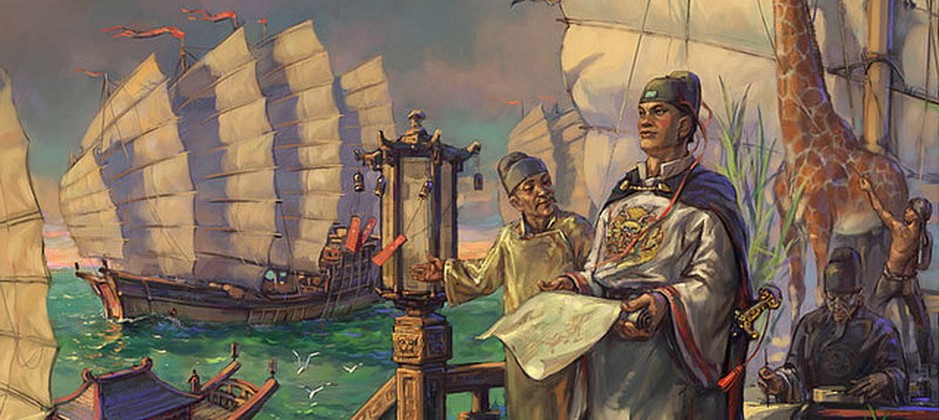
A: Almost a century before the voyage of Christopher Columbus a Chinese explorer named Zheng He made seven ambitious ventures into Southeast Asia. His fleet was much grander than Columbus’s, the smallest Chinese ship being twice the size of the famous Santa Maria. These voyages brought an increase in trade to the region, but Chinese exploration came to an end in the 15th century. Fearing the Mongols threatening the border, the Chinese emperor placed a ban on exploration. The policy was taken quite seriously for some time, and builders of multimast ships were to be executed. Zakaria concludes that this isolationist shift was not the result of one poor decision, but the inevitable result of non-Western stagnation. 

Unfortunately, this came at a critical juncture, as the post-Renaissance Western Europewas just beginning its rapid expansion. Trade relations with Europe could have helped bridge the widening gap between Western and non-Western nations, but Chinese resistance to the new technology proved to be a hindrance. In fact, fro 1736-1795, the  Chinese emperor refused trade with Britain, stating that the country had no use for Britains manufactured goods. Thus, the non-west remained largely rural while Europe quickly became the economic and social center of the world. 

I believe that this can serve as an example of how isolationist policies can be a detriment to a nation’s success. Access to trade and new technologies is of utmost importance to a country. And to go without increases the risk of stagnation.

Q: What is Zacharia referring to when he says “while it may be politically correct, it is historically incorrect?” (65) Do you agree?

A: Zacharia is referring to the idea that China and India’s economies were as strong as Europe’s until the 18th century, and that Western advantages are a result of luck and good timing, namely the discovery of a coal and colonies (cheap energy and massive influx of resources and capital). Zakaria points out that even though China and India possessed economies comparable to Western Europe before the 19th century, they also had populations four times larger. Zakaria prefers to look at growth and GDP per capita as a means of determining a nation’s wealth. From 1350-1950, GDP per capita in China and India remained static. European GDP per capita, however, increased almost 600% during this period. 

This rapid growth finds its roots in the Renaissance movement, which birthed modern science, and propelled Europeans into global prominence. During the Middle Ages, Asia, India, and the Middle East, were all more technologically advanced, but Europe began to pull ahead after the advent of the Renaissance in the 15th century. From this point on, the gap only grew, and the Eastern nations began falling farther and farther behind in most technology and wealth. Asian countries, lacking strong agricultural technologies, could not produce enough food for their populations, leaving many of the areas of the continent poor and hungry. Zacharia’s claim makes sense to me, and my own research on GDP vs. GDP per capita and growth back it up. Unless we are to believe that those of Western European are inherently superior to all others (a belief set that I do not subscribe to) then there must be some reason for the shift in global power that has taken form since the Renaissance. Additionally, Western Europeans lived in a culture of constant warfare, on both the small and large scale. Once gunpowder made its way to Europe, various lords and nobles were continuously innovating and trying to one up on another, spending 40-80% of their budget on military disputes. This is not to say that nations like China and India never participated in war, but many of the enemies they fought were mounted nomads. Since artillery is largely ineffective against this type of opponent, the Asian regions did not spend nearly as much time mastering the use of gunpowder or creating new technologies to enhance its effectiveness (https://economics.yale.edu/sites/default/files/files/Workshops-Seminars/Economic-History/hoffman-120409.pdf).

Create your own website, free on WordPress.com.Create your own website.
Start free