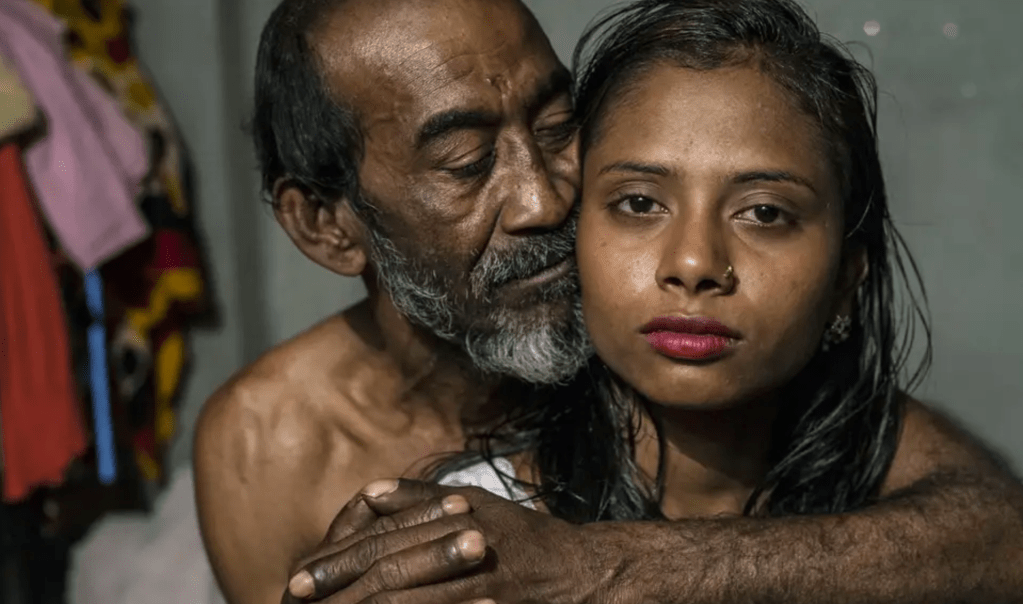
Bangladesh and its citizens are no stranger to sex trafficking. Forced labor and sex slavery have remained ongoing issues in Bangladesh, and it continues to serve as a source country for sex trafficking. This problem especially preys on women and children. Thousands of men, women, and children are trafficked out of the country annually and sexually exploited. Human trafficking is one of the highest profiting illegitimate markets in Bangladesh. Data related to those trafficked are often difficult to acknowledge as credible because of the nature of the business and the unwillingness of those affected to share relevant information. Globally, about 1 in 5 people trafficked are children, compared to Bangladesh’s 1 in 3 figure. This is significant as it is much more likely for children in this country, and South Asia in general, to be exploited. Child marriage is an especially big issue in Bangladesh. According to ‘Girls Not Brides’ 22% of girls are married by the age of 15, and almost 60% are married by 18. Child marriage as a whole in anticipating growth in this area of the world in the coming years. The government of Bangladesh is making efforts to change policy to oppose sex trafficking, however, these efforts are lethargic and minimally effective as the relevance of this crude issue is still monumental.
Goals outlined by the United Nations have aimed at eliminating human trafficking and have raised billions of dollars to do so. These SDGs (Sustainable Development Goals) are being facilitated around the MDGs (Millennium Development Goals) which are a set of 8 international goals established by the United Nations in 2000, to be evaluated in 2015. The goals were listed as follows; to eradicate extreme poverty and hunger, to achieve universal primary education, to promote gender equality and empower women, to reduce child mortality, to improve maternal health, to control HIV/AIDS, malaria, and other diseases, to ensure environmental sustainability, and to develop a global partnership for development. The 17 new goals, to be achieved over the next 15 years are consistent with these previous MDGs. Again, one of these goals addresses the equality of women and hopes to reduce the inequalities they currently face, trafficking included. Female education concerning trafficking awareness can combat sex trafficking by granting women the knowledge and tools needed to keep themselves safe.
The percentage of intelligence in our world that is artificial is increasing. Artificial intelligence is shaping our world and will soon be at the forefront of everything we do. For this reason, it is advantageous to incorporate diversity into this field of study. Additionally, we see AI starting to discriminate against the humans it interacts with. An organization called ‘Diversity in AI’ states “…racial, gender, ethnic, and age discrimination by artificially intelligent systems is probably happening already in many aspects of our lives involving individual and group profiling.” In experimental studies when minority groups are underrepresented, these populations may be more susceptible to error. For this reason, groups like these are aiming to keep AI consistent, fair, and accepting of all ages, genders, races, and abilities.
Sources:
https://www.iom.int/news/human-trafficking-takes-centre-stage-bangladesh
https://www.un.org/sustainabledevelopment/sustainable-development-goals/
https://www.unodc.org/unodc/en/frontpage/2009/June/human-trafficking-in-bangladesh.html
 Globalization: Asia